Change or rekey · Welland
Lock Rekeying
One key for the front door, another for the back, a third for the side door into the garage, and a fourth for the shed. You stand on the step every evening flipping through them in the dark, trying each one until something turns.
Lock Rekeying
In plain words
The choice between rekeying and replacing comes down to the condition of the lock and what you want from it. A cylinder that turns smoothly, sits firmly in a solid deadbolt and matches the look of the door is worth keeping, and rekeying gives it a new key for a fraction of the effort of replacement. Replacement earns its place when the hardware is worn, low grade, damaged, a mismatched keyway that cannot join the house key, or when you want a keypad or a heavier deadbolt anyway. A locksmith looks at each door and tells you which one applies.
How the visit goesThe whole key ring went missing somewhere between the grocery store and the bus. You got back in with the spare, but a set of keys is out there, and you would sleep better knowing they open nothing.
Welland
How the visit goes
Deciding the key groups
Not every door in a home needs to answer to the same key, and the plan is written down before work starts. Most households want the exterior doors keyed alike so one key does everything. Some want exceptions: a basement suite on its own key, a home office or a storage room that visitors should not enter, a shed on a separate key that can be lent out without exposing the house. The locksmith sketches the groups with you, notes how many keys each group needs and who will hold them, and only then begins removing cylinders. Getting this straight first means no cylinder is pinned twice.
When a cylinder is swapped instead of repinned
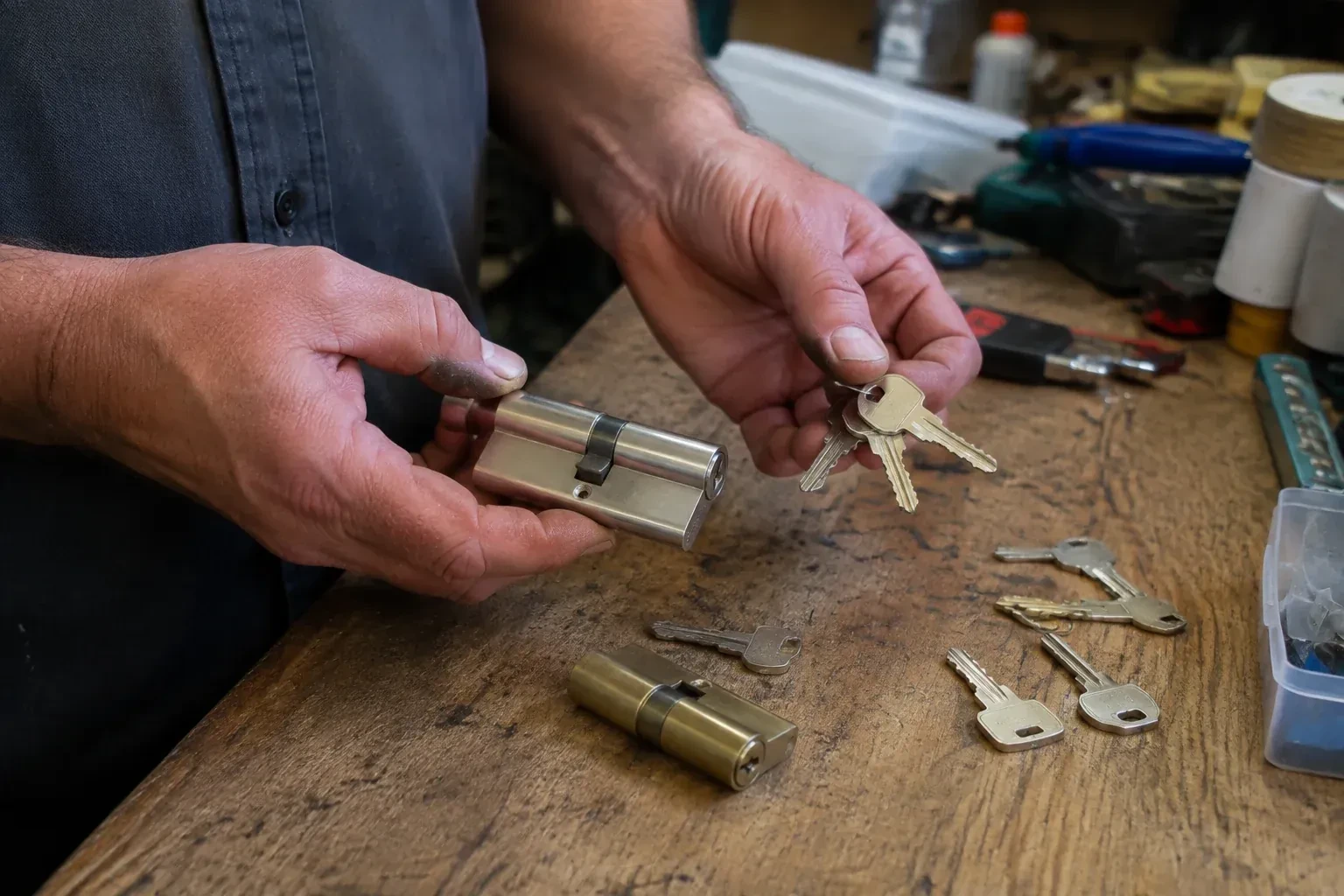
Sometimes the right move for a particular door is a new cylinder rather than new pins, and the locksmith says so before doing it. A cylinder with a keyway that cannot join the household key is replaced with one that can. A plug that has worn oval, springs that have collapsed, or a cylinder someone has already drilled is replaced because fresh pins would not fix its feel. In each case the replacement is pinned to the same new key as the rest of the house, so the swap is invisible in daily use. The old cylinder is handed to you or taken away as you prefer.
A written note of what was done
A short record closes the job: which doors were rekeyed, whether any cylinder was replaced, how many keys were issued and to whom, and any door that was deliberately kept on its own key. For a homeowner it is a line in the house file that answers the question, years from now, of which key opens what. For a landlord it is the handover to give the incoming tenant and to keep for the next turnover. For a property manager it is the start of a proper keying chart. It also makes any later work simpler, since the next locksmith can see what system the house is on.
Lock Rekeying
In the van
- Cylinder shim
- Pinning tweezers and tray
- Code cutter or key duplicator
- Key tags and keying record
- Replacement cylinder for odd keyways
What affects the quote
Same fees day, night or weekend
1No working key for a door
When a cylinder must be shimmed, decoded or picked open before it can be repinned because no key exists for it, that extra step is included in the quote for that door.
2Smart lock override cylinders and codes
Pinning the backup cylinder of a keypad or app lock to the house key is a small extra task, and reviewing or deleting user codes at the same time is another, each named in the quote.
3Access to each door being rekeyed
A rekeying visit goes smoothly when every door is reachable without delay: an empty unit, a cleared hallway, or someone available to let the locksmith into each room. Locked common areas, tenants who are out, or furniture blocking a cylinder all add time the locksmith accounts for on site.
Lock Rekeying: questions
How is rekeying different from replacing the lock?
Rekeying keeps your existing deadbolt or handle set and gives it a new key, commonly by changing the pins inside, though some cylinders reset a different way. Replacing removes the whole lock or cylinder and fits new hardware. Rekeying suits locks that are in good condition and simply need a fresh key. Replacement is the better call for hardware that is worn or damaged, built to a low grade, on a keyway the other doors cannot share, or due for a change of style or a keypad.
What exactly does rekeying a lock change?
What changes depends on the cylinder. Many locks turn when a row of small bottom pins lines up at a precise level, set by the cuts on your key, and during a rekey the locksmith tips those pins out and loads a set that lines up with a different key, cut new for you; some residential cylinders instead reset a side-locking bar without removing any pins. From then on the new key operates the lock and older keys do not, and the hardware on the door stays as it was.
My house is older and has a mortise lock. Can that be rekeyed?
Yes. A mortise lock, the kind with a large case set into the edge of the door, uses a threaded cylinder held by a set screw reached from the door's edge. The cylinder unthreads, is pinned like any other and screws back in. Where a very old lock uses a bit key or a lever mechanism instead of a pin cylinder, the locksmith will explain the options, which may include fitting a modern cylinder into the existing case so the door keeps its original hardware.
Change or Rekey Locks
- Lock Replacement & UpgradeThe house is fifteen years old and every exterior door still wears the light hardware the builder…
- Vintage Mortise Lock ServiceSomeone painted the door years ago without removing the hardware.
- Smart Lock InstallationYour mother still lives on her own, and the personal support worker, the pharmacy delivery and two…
Lock Rekeying near you
The lock services offered in Welland are grouped the way a door is used. Getting back in when you are locked out. Deciding who holds a working key. Upgrading the hardware so the door resists more than a casual try. Keeping commercial entrances working. Opening and maintaining safes. Each is described below.