Locksmith · Welland
Useful things to know
These are notes, not lectures. Each one takes something people often get wrong about locks and keys, explains it in a paragraph or two, and leaves you better placed to decide what your doors need and what they can happily do without.
- Issue 1Vintage Mortise Lock Service: what to note firstThe knob flops loose on its spindle and never springs back to level. When you turn it the latch pulls in, but you have to push the knob back yourself, and lately the latch has started staying inside…Read
- Issue 2Broken Key Extraction: how the work is doneThe tools are simple and precise. A hook extractor is a thin strip of spring steel with a barb at the tip; it slides along the groove of the keyway above or below the fragment, snags one of the cuts…Read
- Issue 3Ignition Lock Repair: questions about the priceA single worn key is a common starting point after buying used, and the visit usually has two parts: reading the existing wafers so a crisp new key can be cut, and deciding whether the barrel itself…Read
Locksmith FAQ
Lockout Services
How long does a home lockout usually take once the locksmith arrives?
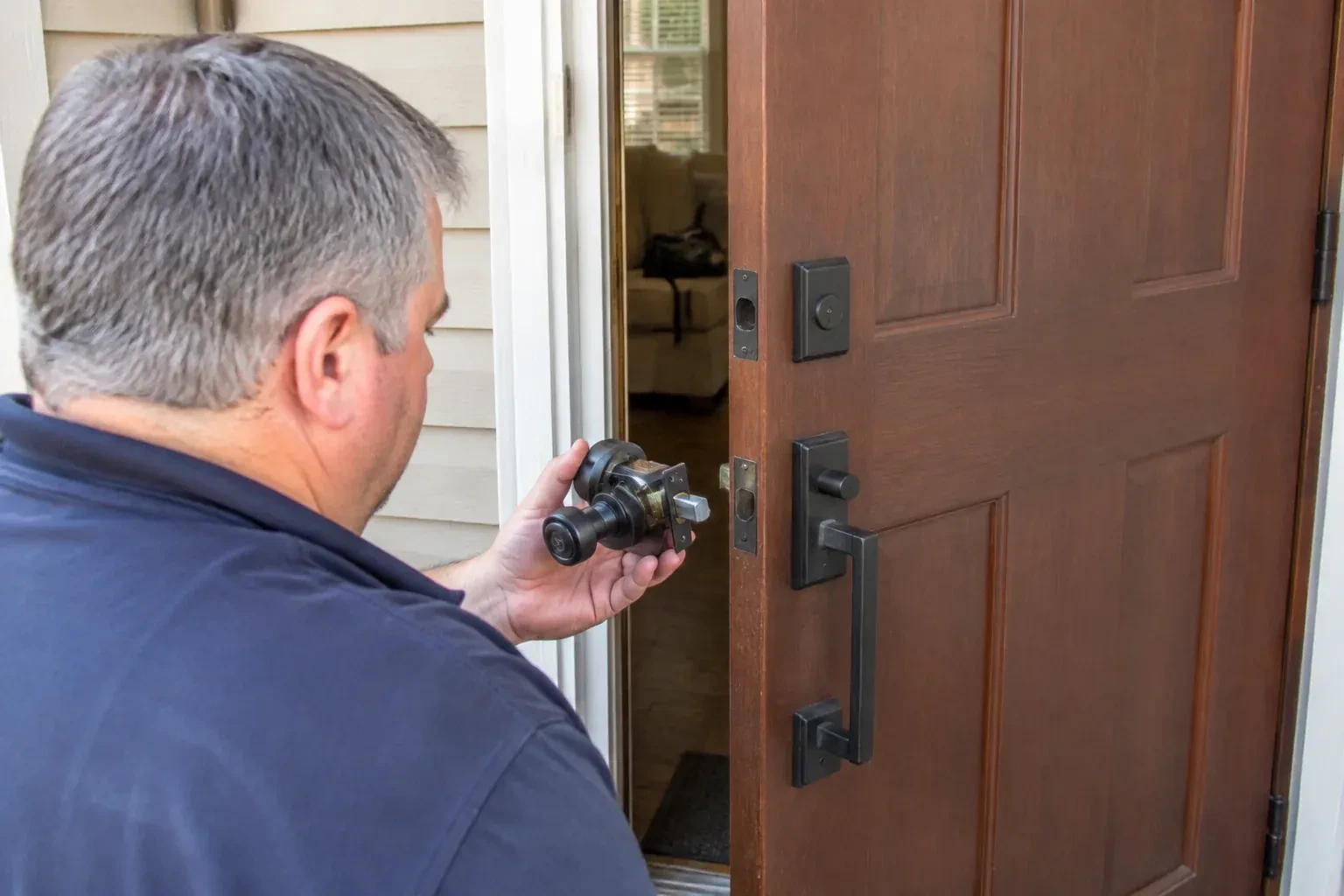
The opening itself is often the shortest part of the visit; verifying identification, examining the lock and testing the door afterwards take a share of the time too. A standard knob or deadbolt on a well-fitting door is generally a matter of minutes, while a high-security cylinder, a frozen lock or a swollen door takes longer. If a cylinder has to be drilled and replaced, or locks are rekeyed while the locksmith is there, allow extra time for that work. Home Lockout Service
Our storefront lock freezes every winter. What do you do about it?
On the day, the cylinder is thawed with lock de-icer or gentle warmth, never hot water or a flame near aluminium, and dried before a moisture-shedding dry lubricant goes in. To stop the pattern, the keyway gets a cover on the most exposed door, salt is kept off the bottom rail, and the closer is adjusted for cold fluid so the door still latches. A cylinder that freezes yearly may be better placed or shielded. Business Lockout Service
Is a broken key a sign the whole lock is worn out?
Sometimes, and the visit answers it. A key that failed from its own fatigue in a clean, smooth cylinder says nothing against the lock. A key that broke because the pins were worn flat, the cap had loosened or the keyway was full of grit says the cylinder needs a service or a rekey. One that broke in a corroded, pitted plug is telling you the lock is due for replacement. Broken Key Extraction
Should I keep the broken lock and strike?
Yes, unless the insurer has already said they are not needed. Insurers generally ask policyholders to retain damaged property until the claim is settled, and a bag holding the twisted cylinder, torn strike and split wood answers an adjuster's questions more clearly than any description. The locksmith hands them over at the end of the visit along with a written note of what was replaced. Photographs of the parts in place, before removal, complete the record. Break-In Damage Lock Repair
Change or Rekey Locks
How is rekeying different from replacing the lock?
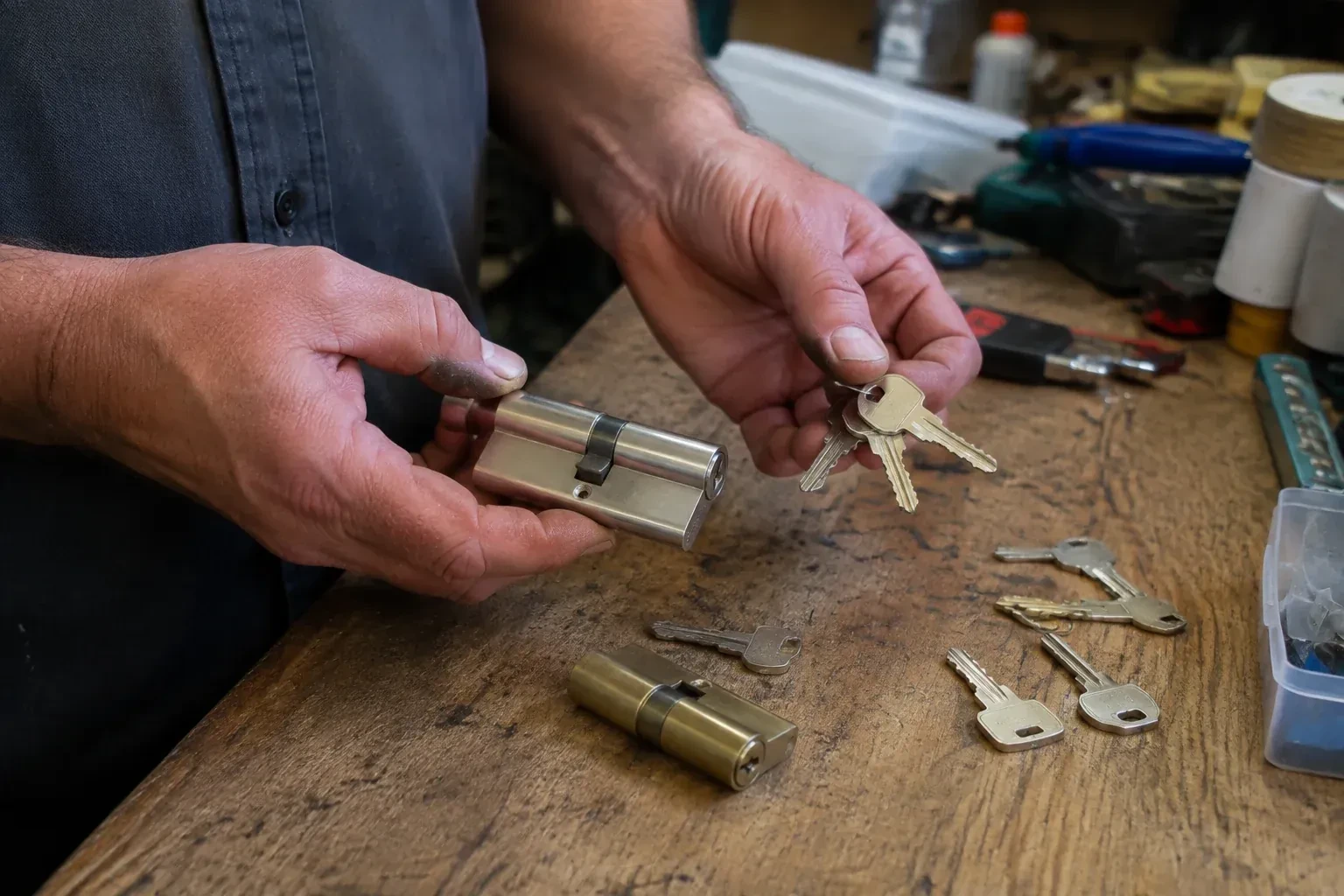
Rekeying keeps your existing deadbolt or handle set and gives it a new key, commonly by changing the pins inside, though some cylinders reset a different way. Replacing removes the whole lock or cylinder and fits new hardware. Rekeying suits locks that are in good condition and simply need a fresh key. Replacement is the better call for hardware that is worn or damaged, built to a low grade, on a keyway the other doors cannot share, or due for a change of style or a keypad. Lock Rekeying
Why does the strike plate matter so much?
The strike is the metal plate the bolt throws into, and it is where a kicked door usually fails: short screws bite only into the thin jamb board, which splits. A reinforced strike or strike box fastened with 75 mm screws passes through the jamb into the stud behind, so a blow is met by the framing of the house. On a wood frame, strike screws that reach at least 30 mm into solid wood behind the jamb are what actually holds. Deadbolt Installation
Should I rekey my locks or replace them?
Rekey when the hardware is sound and the problem is the key: a lost copy, a move, or too many keys for one house. Replace when the mechanism itself is worn, the housing or bolt is damaged, the grade was never suitable for the entrance, or you want a different function, finish or a keypad. Many visits do both, keeping good locks and rekeying them while replacing the tired ones, all to one key. Lock Replacement & Upgrade
Is it safe to keep a deadbolt that is keyed on both sides of the entry door?
It is better not to. A bolt that needs a key from inside can trap the household when a key is not to hand, and a door people leave the home through works better opening without keys or special knowledge. During service the locksmith fits a thumb-turn to the bolt tail or otherwise makes the inside release without a key, keeping the vintage lock and the clear way out. Vintage Mortise Lock Service
High Security Locks
Can a mechanical dial safe be opened without drilling it?
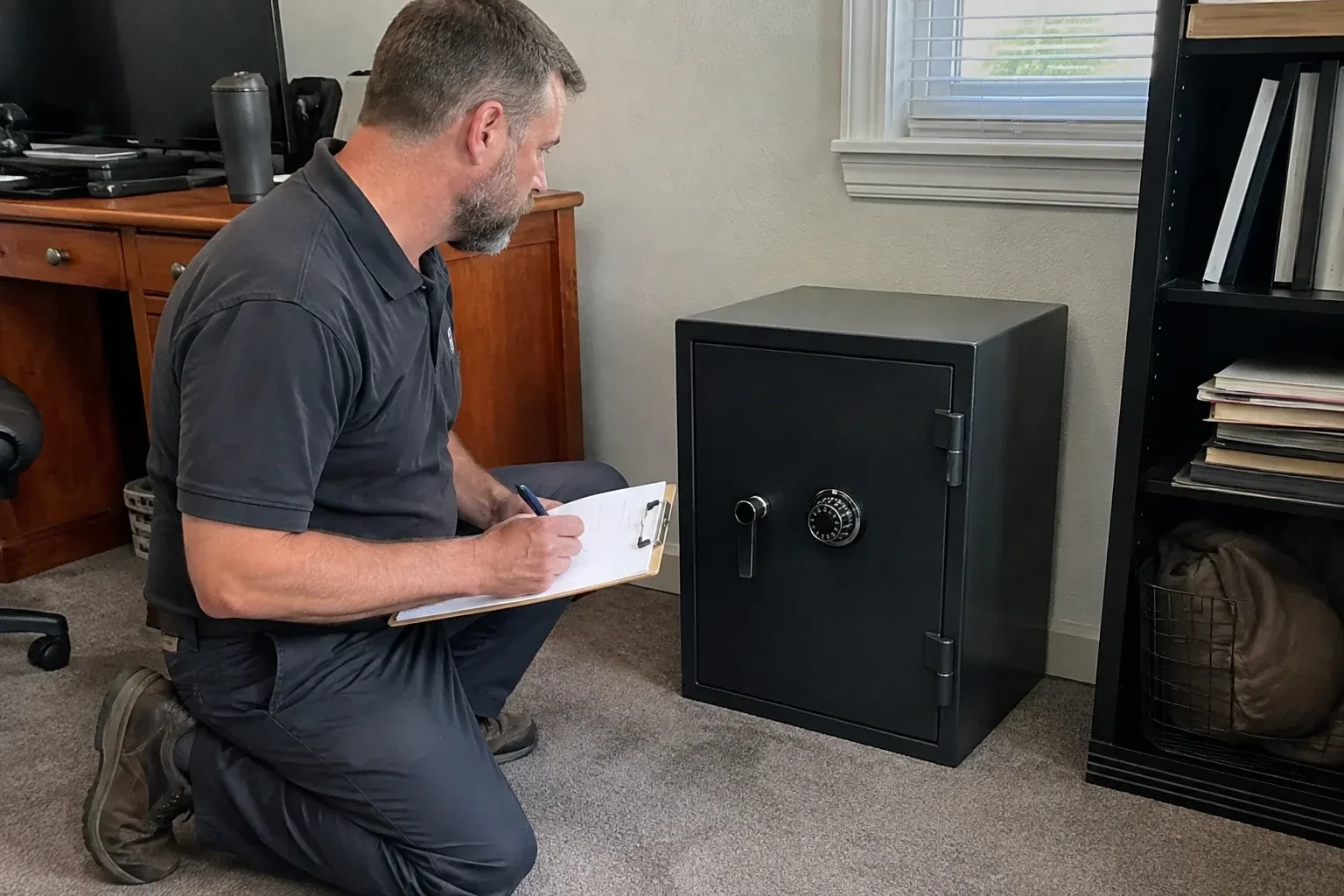
Most of the time, yes. Manipulation reads the wheel pack through the dial by feel, and decoding tools built for a specific lock family read the gate positions directly, both without any lasting effect on the lock. Whether either works depends on the lock's own security rating and condition, since a high-security Group 1 lock resists these methods far longer than an older Group 2 one, but drilling is only used once both routes are ruled out. Safe Opening & Combination Change
Will you service a safe that another company installed?
Yes, servicing does not depend on who did the original installation. The locksmith opens the bolt-work, tests the lock through a full cycle, checks the anchoring underneath, and replaces batteries in an electronic lock as needed, regardless of the brand or who fitted it originally. Not knowing the history of the unit just means a slightly more thorough first look before any work begins. Safe Installation & Servicing
Will my door look different afterwards?
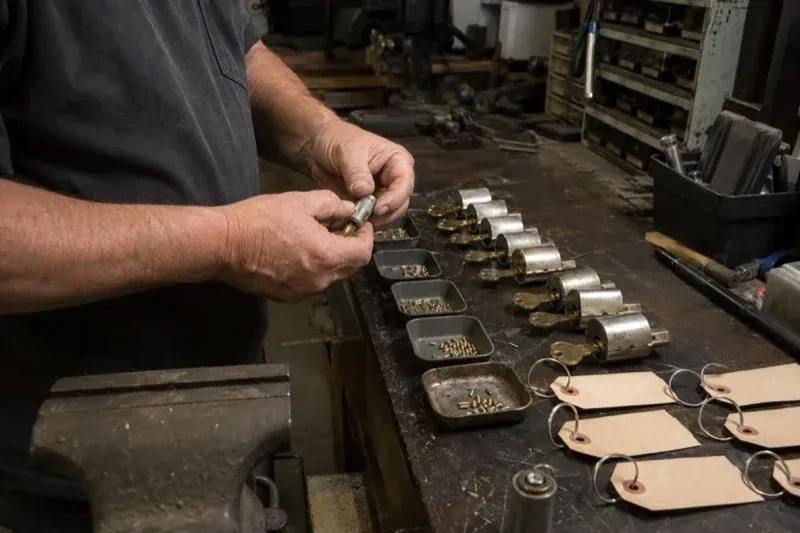
Barely. A high security cylinder sits in the same place as the old one and is usually distinguished only by a different keyway shape and sometimes a hardened collar. A graded deadbolt is a standard-looking deadbolt in your chosen finish. The reinforced strike is longer than the plate it replaces and the wrap-around reinforcer, if used, shows as a neat metal band on the door edge. The difference is felt when you lock up, not seen from the street. High Security Locks
Commercial Locks
How often should a business change its keys as a matter of routine?
There is no fixed interval. Rekey on events rather than on a calendar: a key not returned, a lease change, a break-in, a renovation crew finished, or a key count that no longer matches the register. Businesses with a good register and a restricted keyway often go years between rekeys because nothing prompts one. A yearly check of the register against the keys on the hook is the habit that tells you when the time has come. Commercial Rekeying
What does key control actually mean?
It means knowing, at any time, how many keys exist for a given door or level, who holds each one, and how a new copy would be authorized. A master key system supports key control by design, since keys are marked by role, logged by serial, and cut only against the chart, rather than copied informally whenever someone asks for one. Master Key System Design
Do we still need physical keys after this is installed?
On hardware that supports it, yes: a conventional cylinder sits alongside the electronic reader, cut to work like any other key on the property, though some access-controlled locks are built without one. Where it is fitted, it is meant as a fallback rather than the everyday way in: if a battery dies, a controller faults, or the power stays out longer than the backup lasts, the door still opens by key while the issue is sorted out. Access Control Installation
What happens with a pair of doors instead of one?
It depends on the pair. Some latch independently and need nothing extra. Where the hardware calls for a set closing order, a coordinator lets the two leaves close in the right sequence, letting the active leaf's device seat properly into a strike carried on the inactive leaf, or into an astragal. Alternatively, the centre mullion can be removed and a vertical-rod device fitted to each leaf, turning the pair into one wide exit. Whichever applies, both leaves are tested working together, not one at a time. Panic & Exit Hardware
Car Keys
What should I have ready when I call?
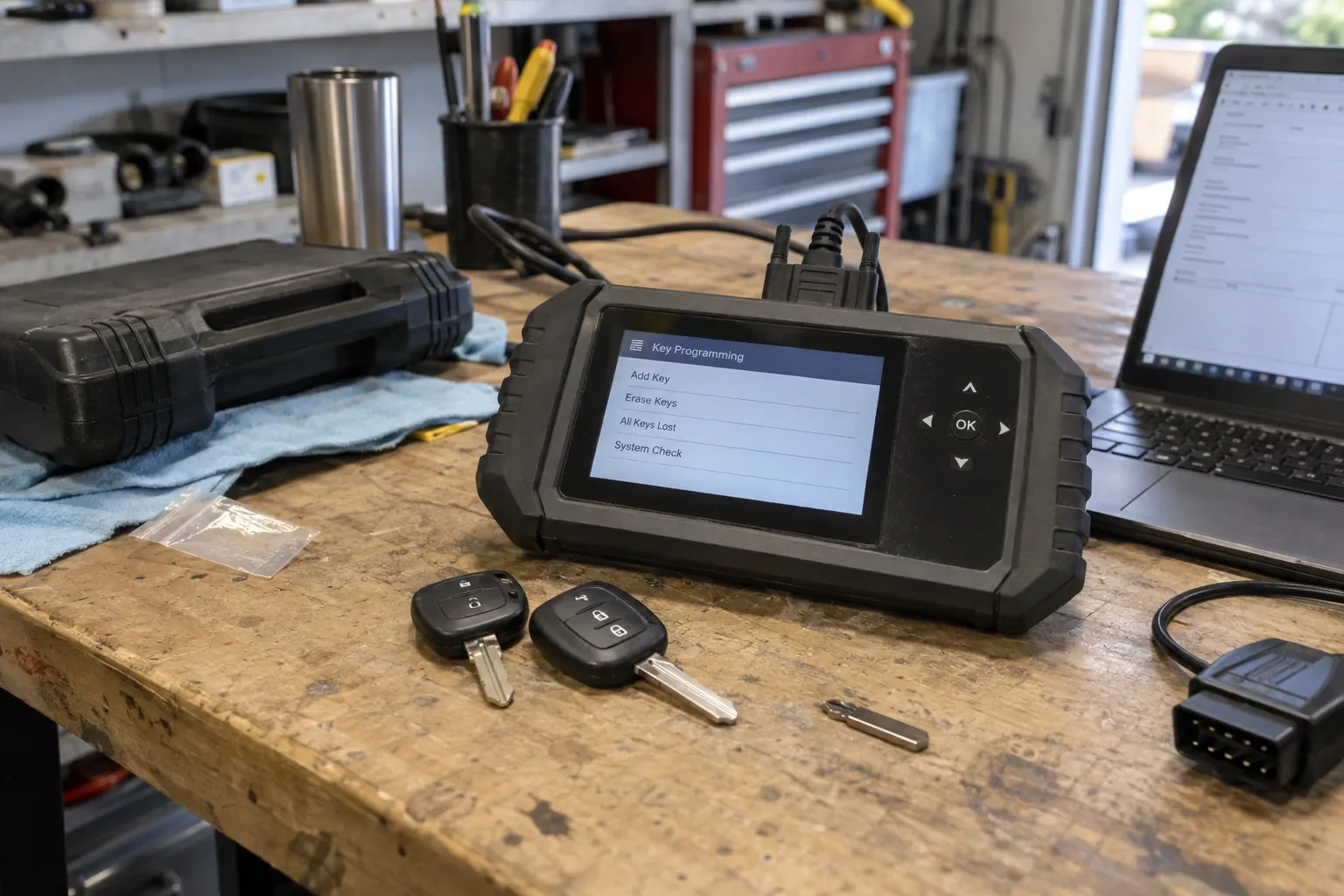
The make, model and year of the vehicle, the colour and plate if you can see it, exactly where the car is parked and how to reach it, and where the keys are: on the seat, in the trunk, lost, snapped, or in a fob that has gone quiet. Say whether anyone or any animal is inside, whether the car is a rental or a company vehicle, and whether your identification is on you or in the glovebox. Car Lockout Service
My fob is cracked but still works. Do I need a whole new key?
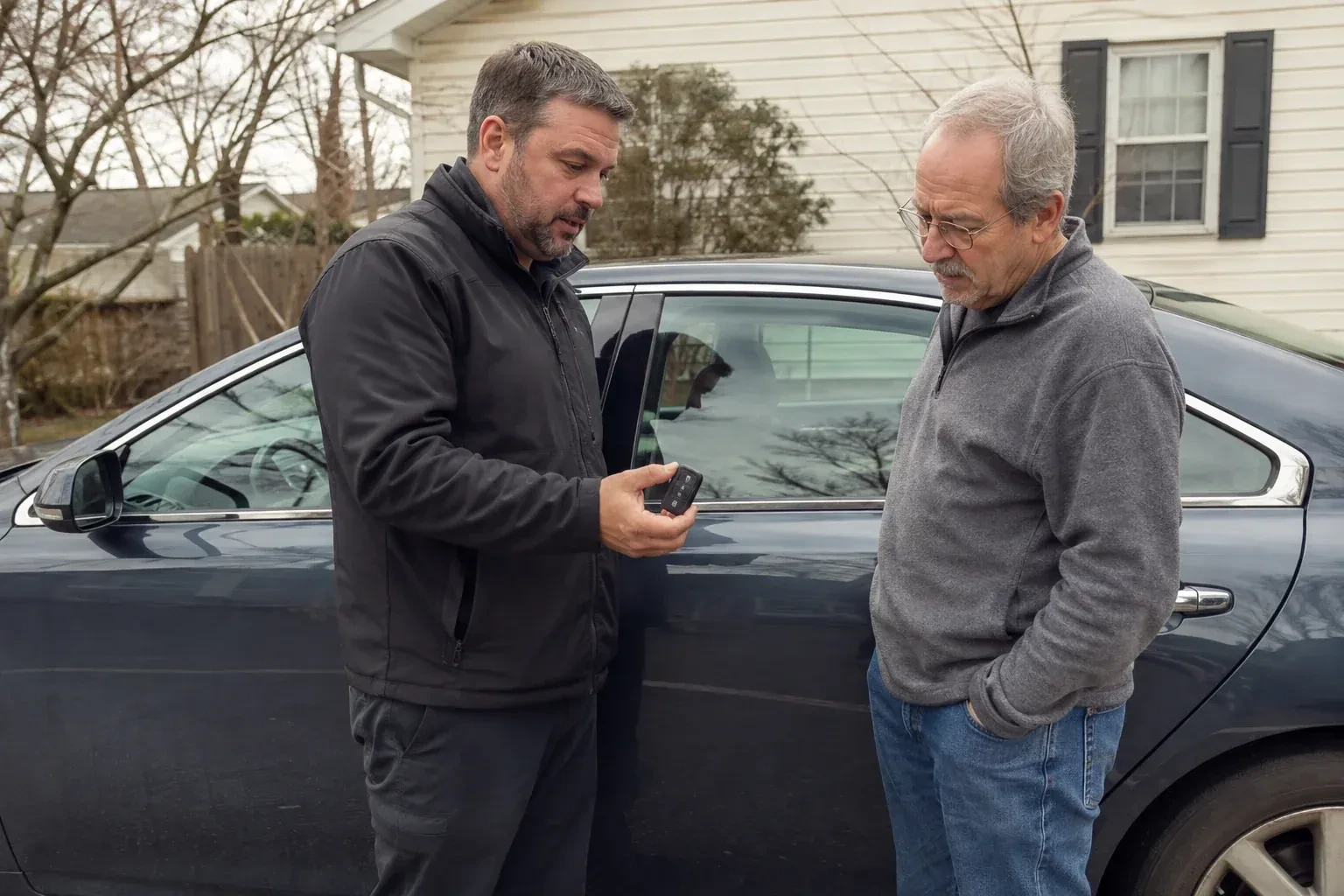
Usually not. A cracked case often protects a healthy circuit board and transponder, and those can be moved into a new shell of the same pattern with a freshly cut blade. Because the electronics are unchanged, nothing needs programming, and the rebuilt key behaves exactly as before. A new key is the answer when the board is corroded, a button has died or the chip has been damaged. Car Key Replacement
What if I have lost track of how many keys already exist for the car?
That is worth mentioning when you call, since it changes the plan. If the count is genuinely unknown, or a key was lost at some point and never accounted for, reprogramming the vehicle to accept only the keys currently in hand is often the sounder route, rather than adding a new spare on top of an uncertain set that might include a key nobody can locate anymore. Spare Car Key Duplication
Can a used or aftermarket fob be programmed to my vehicle?
Often, yes, provided its hardware and chip match what your specific vehicle accepts, checked against the vehicle's identifying information before anything is ordered. A used OEM smart key is also checked for prior registration, since some become permanently unusable once reset or removed from another vehicle, so confirming eligibility first avoids buying a fob that never registers successfully. Key Fob Programming
On-site assessment preferred
Request a visit
Start with a phone call. Let's fix that lock.