Change or rekey · Welland
Vintage Mortise Lock Service in Welland
Someone painted the door years ago without removing the hardware. The faceplate, the strike and the little thumb-turn are all under several coats, the deadbolt scrapes when it moves, and the knob is stiff enough to leave marks on your hand.
Vintage Mortise Lock Service
In plain words
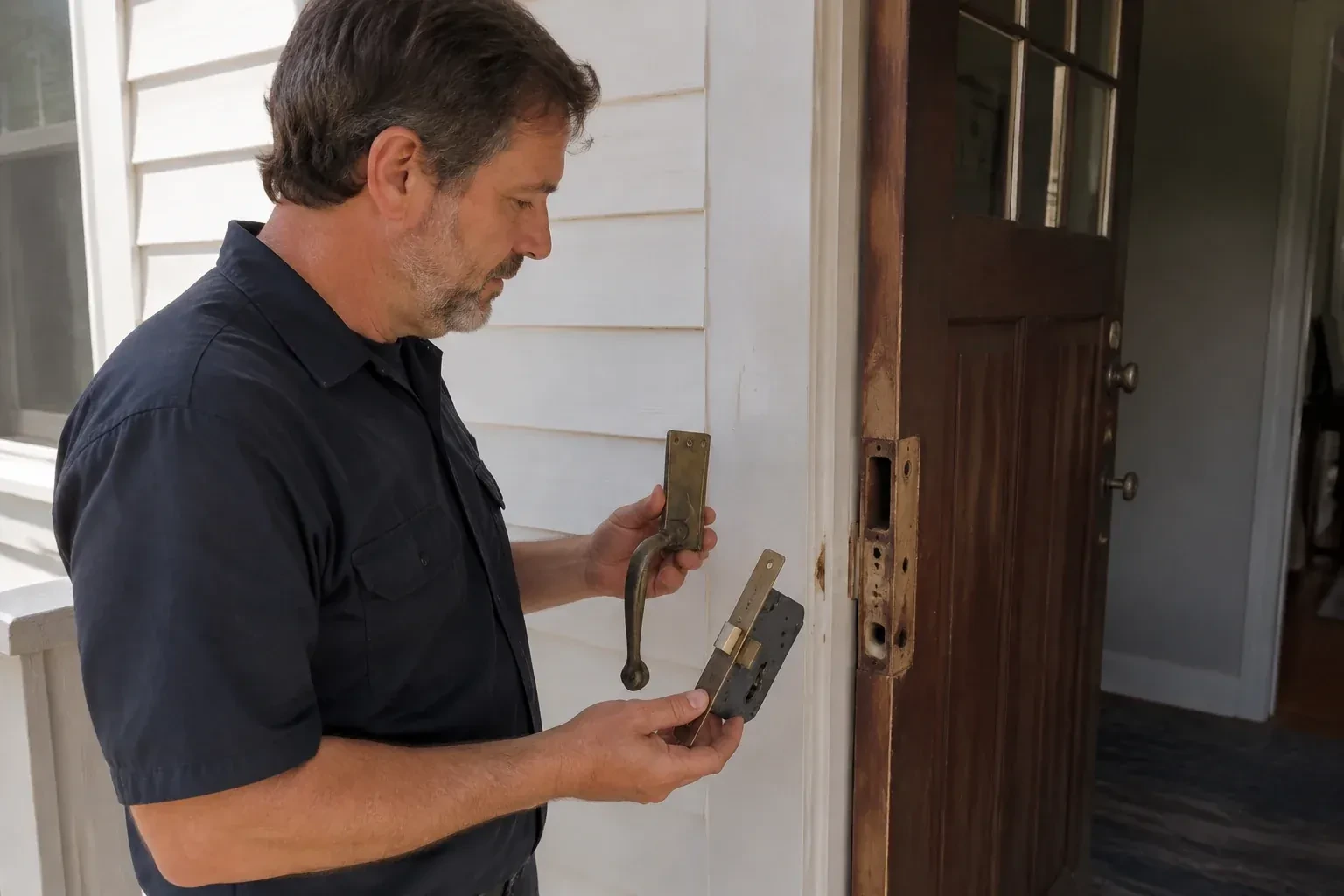
Vintage mortise lock service is the repair of the original lock in an older door rather than its removal. The lock is a rectangular steel case that lives inside a pocket in the door edge, and nearly everything that goes wrong with it, a tired spring, dried grease, a worn hub, a lost key, can be put right on the bench. The locksmith confirms you own or occupy the home, takes the case out through the door edge, rebuilds it, sorts out the keys and puts it back in the same pocket. The door keeps its knobs, escutcheons and history, and it locks as it did when new.
How the visit goesThe brass knob on the front door of your century home turns, but nothing happens on the other side. The latch stays tucked in, the door swings free, and the only thing holding it shut is the deadbolt and a bit key that has worn down to a nub.
Welland
How the visit goes
Repair, replacement cylinder or replacement case
The last step of the check is deciding what the lock needs, in plain terms, before any of it is done. Most cases need cleaning, springs and adjustment, and that is the recommendation. A cylinder lock with a worn plug may be better served by a new mortise cylinder of the same thread and cam, keeping the case. A cracked case, a bolt worn thin or a hub broken through calls for a replacement case in the same pocket, and the locksmith measures for it on the spot. You hear which of these applies and why, and if the answer is a replacement case, the choice between a reproduction and a modern case is yours to make.
Inside the case on the bench
With the cover screws out, the case opens like a book: the latch bolt with its spring, the hub the spindle passes through, the deadbolt with its lever or tumblers, and the springs holding each in place. The locksmith notes what is broken, worn or merely stuck, then cleans the case with solvent and a brass brush until the old grease and rust are gone; old paint on the hardware is treated as a possible lead hazard and cleared with contained, lead-safe methods rather than dry brushing. Parts are cleaned individually, burrs are dressed off the bolts, and the hub square is checked against a fresh spindle to see whether it has rounded.
Parts, records and the house file
Anything that came out of the lock, a broken spring, a worn lever, the old cylinder, is offered to you rather than thrown away; some owners keep the originals with the house's papers. The locksmith leaves a short account of what was done: the case type and size, what was replaced, whether keys were made or a cylinder rekeyed, and how the strike was adjusted. For a designated heritage property this record shows the original hardware was retained. For everyone else it is simply the sheet you hand to the next locksmith, or the next owner, so nobody has to rediscover what is inside the door.
Vintage Mortise Lock Service
In the van
- Bit key blanks
- Latch and hub springs
- Warding files
- Deadbolt lever springs
- Reproduction mortise case
What affects the quote
Same fees day, night or weekend
1Whether the door has to come off its hinges
Some mortise cases can be serviced with the door hanging in place, while a tight jamb or a stubborn case sometimes means lifting the door off its hinges onto a level bench. That step is identified once the case is open and the repair needs are clear.
2Number of locks in the visit
One entry lock is the simplest case. A whole floor of interior latches, or the front and back doors together, is a longer visit, and each case is quoted on its own so the total is easy to follow.
3Strike and hinge work
Where the door has dropped or swelled, adjusting or moving the strike and tightening or packing hinges is part of the fix. It is small work but it is listed, so you see what was done to the door.
Vintage Mortise Lock Service: questions
Is it safe to keep a deadbolt that is keyed on both sides of the entry door?
It is better not to. A bolt that needs a key from inside can trap the household when a key is not to hand, and a door people leave the home through works better opening without keys or special knowledge. During service the locksmith fits a thumb-turn to the bolt tail or otherwise makes the inside release without a key, keeping the vintage lock and the clear way out.
Which parts usually need replacing?
Springs, first and foremost: the latch spring, the hub spring that returns the knob, and the small springs on the deadbolt levers. After that, the spindle and knob set screws, a hub whose square has worn round, a worn deadbolt lever or follower, and on later locks the cylinder set screw or the cylinder itself. Bolts, cases and trim are almost always kept, cleaned and refitted rather than replaced.
Is it worth repairing an old mortise lock instead of replacing it?
Usually, yes. The mechanisms are simple and robust, and what fails is nearly always a spring, dried grease or wear on one part, all of which are repairable on a bench. Replacing the lock with a modern cylindrical set means boring a large hole through the door stile and filling the old pocket, which is more work and changes the door for good. A rebuilt case keeps the original trim and keeps the door intact.
Change or Rekey Locks
- Deadbolt InstallationYou bought a keypad deadbolt online and pulled the old one off, only to find the hole in the door…
- Lock Replacement & UpgradeThe house is fifteen years old and every exterior door still wears the light hardware the builder…
- Smart Lock InstallationYour mother still lives on her own, and the personal support worker, the pharmacy delivery and two…
Vintage Mortise Lock Service near you
The lock services offered in Welland are grouped the way a door is used. Getting back in when you are locked out. Deciding who holds a working key. Upgrading the hardware so the door resists more than a casual try. Keeping commercial entrances working. Opening and maintaining safes. Each is described below.